
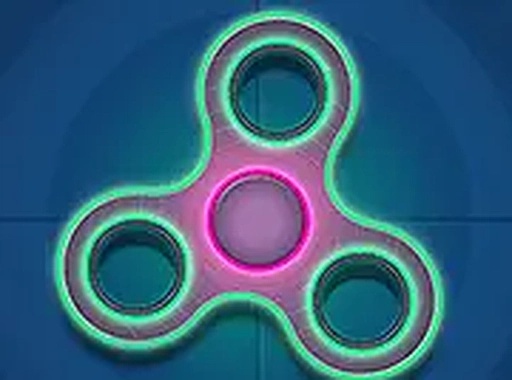
Core Motion & Control
The central action revolves around using your mouse or trackpad to set a digital spinner into rapid rotation. By clicking and dragging across the spinner, you determine both the speed and direction of its spin. The game responds directly to the smoothness and consistency of your gesture, making each session a test of fine motor control. There are no buttons to press or menus to navigate—just the spinner and your input.
Two Distinct Play Styles
Players can choose between a timed challenge and a pressure-free practice mode. In the timed mode, each round lasts a fixed duration, and the goal is to achieve the highest possible rotation speed before time runs out. This setup encourages focused, efficient movements. The free mode removes all time constraints, allowing you to experiment with different drag techniques at your own pace. Both modes share the same simple interface, so switching between them is effortless.
Visual Simplicity & Focus
The design deliberately avoids clutter. A plain background and a clearly defined spinner keep your attention on the task. There are no distracting animations, score pop-ups, or decorative elements. This minimal approach helps players concentrate on the physical feedback of their actions. The full-screen option further reduces visual noise, making it easier to immerse yourself in the spinning motion.
Accessibility & Performance
Because the game runs entirely in a web browser, there is no software to install or update. It works on most modern desktop systems with a mouse or trackpad. The lightweight code ensures smooth performance even on older computers. While touchscreens can be used, the precision required for high scores is best achieved with a pointing device. This design makes the game suitable for quick breaks or longer practice sessions.
Building Skill Over Time
Improvement comes from understanding how your input affects the spinner. Consistent, controlled drags tend to produce higher speeds than rapid, erratic movements. The free mode is ideal for developing a feel for the spinner’s response. As you practice, you learn to modulate the speed and angle of your drags. This gradual learning curve keeps the activity engaging without overwhelming new players.






Comments
0 comments